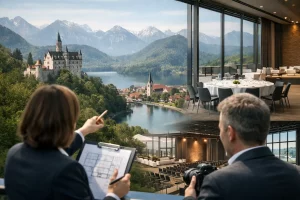
A board dinner in Munich, a 400-person conference in Berlin, or an incentive program across the Rhine may look straightforward on a proposal. The reality begins once guests arrive from several countries, dietary requirements change, a flight is delayed, and the venue requires a last-minute adjustment. That is when should companies use a DMC becomes a practical planning question, not simply a procurement decision.
A destination management company is most valuable when an event requires local authority, operational control, and a guest experience that reflects the standard of the host organization. For international companies bringing groups to Germany, a DMC provides the on-the-ground structure needed to turn an ambitious brief into a well-run program.
When Should Companies Use a DMC?
Companies should consider a DMC when the event is destination-based and the internal team or lead agency does not have deep, current knowledge of the local market. This is especially relevant for meetings, incentives, conferences, conventions, executive retreats, client hospitality, and multi-day programs where one weak supplier or missed transfer can affect the entire experience.
A DMC is not merely a booking resource. The right partner acts as the destination extension of your planning team: translating objectives into suitable venues, reliable hotel options, transportation plans, cultural programming, and clear on-site coordination. For groups traveling to Germany, that means understanding not only which hotel has the right meeting space, but which neighborhood supports the event narrative, travel patterns, security needs, and guest expectations.
The larger or more visible the event, the greater the value of a local operating partner. Yet group size alone is not the deciding factor. A 30-person executive incentive with private access, complex arrivals, and a gala dinner in a historic venue can demand more destination expertise than a standard 200-person hotel meeting.
The Situations Where Local Expertise Matters Most
Your team is planning from another country
Remote planning often creates false confidence. Online venue images do not reveal traffic patterns, loading restrictions, neighborhood character, room flow, or whether a proposed experience will feel premium for your particular guests. A local DMC evaluates options in context and can recommend what will work on the day, not only what looks good in a presentation.
Germany is exceptionally well equipped for business events, but its strongest options are rarely interchangeable. Berlin offers creative energy and international scale. Munich brings refined hospitality, Alpine access, and strong corporate infrastructure. Hamburg combines maritime character with sophisticated venues, while Frankfurt suits high-efficiency international meetings. A DMC helps match the destination to the purpose rather than selecting a city solely by airport access or hotel rate.
The program involves several moving parts
Companies should use a DMC when hotels, meeting space, ground transportation, off-site events, catering, guides, production teams, and attendee communications must operate as one program. Managing each supplier separately can appear cost-effective at first. It also leaves the organizer responsible for aligning timelines, resolving gaps, and determining who owns a problem when something changes.
A destination management partner centralizes that accountability. If an inbound flight is delayed, guest transfers need to be revised, a dinner reservation needs to shift, and the host needs an updated guest list, those decisions must be made quickly and with local awareness. This is where meticulous project management protects both the guest experience and the event organizer’s time.
The experience must feel distinctive, not standardized
A conventional meeting room and group dinner may be appropriate for a focused business agenda. However, incentives, leadership gatherings, customer events, and awards programs often need more than functional logistics. They need a sense of place.
A strong DMC designs programs around the company’s audience and purpose. That may mean a private evening in a venue that will take your breath away, a chef-led culinary experience, a heritage-focused city program, or team-building that is genuinely engaging rather than obligatory. The objective is not to add activities for the sake of a full itinerary. It is to create moments that reinforce relationships, recognition, and brand value.
Local supplier relationships matter here. They can provide access to unusual settings, trusted hosts, and tailored experiences that are difficult to source through generic online channels. They also bring candid advice. Not every spectacular venue is suitable for every guest profile, and not every cultural activity fits a tight conference schedule.
Risk tolerance is low
A DMC is particularly valuable when the event has executive visibility, significant attendee travel, contractual complexity, or limited room for disruption. Board-level meetings, product launches, annual sales conferences, and customer programs carry reputational stakes. A missed airport transfer or an underprepared gala is more than an inconvenience.
Local professionals reduce risk through detailed preparation: site inspections, supplier briefings, timing plans, contingency options, and a clear on-site command structure. They understand practical factors that may not appear in a contract, from city-center access rules to exhibition schedules that affect hotel availability.
This does not mean a DMC can prevent every change. Weather, transport interruptions, and late attendee requests are part of live event delivery. The value lies in having experienced people ready to make informed decisions without compromising the standard of service.
When a DMC May Not Be Necessary
Using a DMC is not automatically the best choice for every trip. A simple internal meeting at a familiar hotel, with a small local team and no off-site programming, may be managed effectively by the company or hotel directly. Likewise, if an experienced event agency already has a dedicated local office and established operational infrastructure in the destination, an additional DMC layer may not add enough value.
The key is to assess complexity honestly. If your team has no local contacts, needs multiple services, or wants a customized program, direct coordination can become expensive in staff time and exposed to avoidable risk. The cheapest initial quote is not always the lowest total cost once last-minute changes, fragmented communication, and operational pressure are considered.
What Companies Gain From a DMC Partnership
The most effective DMC relationships begin before supplier selection. A destination partner can challenge assumptions in the brief, identify opportunities that fit the budget, and build an operating plan that supports the desired outcome.
For corporate planners, the benefits are practical and strategic. You gain a single point of coordination, destination-specific supplier knowledge, stronger control over the attendee journey, and support for delivering high-class services without overloading your internal team. For agencies, a local DMC becomes a trusted delivery partner that protects the client relationship while bringing credible destination insight to the table.
Cost management is also more nuanced than comparing line items. A professional DMC should be transparent about what is included, what remains variable, and where investment will produce a visible guest benefit. Sometimes the premium option is the right decision. In other cases, a different venue layout, transfer model, or program sequence can create a better outcome without increasing spend.
Choosing the Right DMC for Germany
Not every destination management company works in the same way. Look for a partner that asks detailed questions about your audience, event objectives, decision-making process, and non-negotiables. A generic package may be efficient to quote, but it rarely delivers the level of relevance required for a high-value corporate event.
You should also evaluate operational depth. Who will manage the program on site? How are suppliers selected and briefed? What happens if an itinerary changes? Can the DMC coordinate both the major elements and the fine details, including attendee administration, VIP handling, and personalized requests?
My German DMC approaches these questions with German-style precision and a consultative mindset. The goal is not simply to fill an itinerary. It is to build a program that feels effortless to guests because every important detail has been considered in advance.
A destination event should leave attendees talking about the ideas, connections, and experiences they shared, not the logistics behind them. When the stakes are high and the destination matters, a capable DMC gives your team the confidence to focus on the people in the room while local experts take care of everything around them.