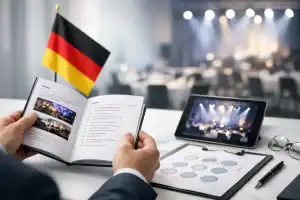
The shortlist looked perfect on paper — a historic hall in Munich, a waterfront space in Hamburg, a design hotel in Berlin. Then the real questions started. Can the gala setup happen without blocking guest flow? Is coach access realistic at peak arrival times? Will the venue team respond at the speed an international conference schedule demands? That is where venue scouting Germany becomes a strategic service, not just a search exercise.
For corporate planners, incentive buyers, and agency partners, the right venue does far more than host an event. It shapes logistics, sets the tone for the guest experience, and quietly determines how much risk sits behind the program. In Germany, where standards are high and expectations around timing, structure, and service are even higher, venue selection has to balance impression with execution.
Why venue scouting Germany is more complex than it looks
Germany offers exceptional event infrastructure, but that does not mean every strong-looking venue is right for a business event. A property may be visually impressive and still fail on load-in access, breakout flexibility, branding options, or noise restrictions. Another may have perfect meeting flow but feel too generic for a senior leadership summit or customer-facing incentive program.
The complexity also varies by city. Berlin offers creative freedom and a broad range of industrial, cultural, and contemporary settings, but availability and permit considerations can become demanding. Munich is polished, high-performing, and ideal for premium programs, though top venues often book far in advance. Frankfurt is efficient and well suited to conferences and finance-driven events, yet the challenge is often finding spaces with personality rather than pure function. Hamburg combines maritime character with strong hospitality standards, but weather, transport timing, and harbor logistics can affect planning in practical ways.
This is why venue scouting should never start with aesthetics alone. It has to start with the event objective, attendee profile, timing, technical requirements, and the level of service expected on site.
What experienced venue scouting in Germany actually evaluates
At a premium B2B level, venue scouting is part research, part operational assessment, and part negotiation strategy. The visible outcome may be a curated shortlist, but the real value lies in filtering out the wrong options before they become expensive problems.
A strong scouting process tests whether a venue can support the full event concept. That includes room capacities in real layouts, not idealized floor plans. It includes guest circulation, registration positioning, security points, speaker holding areas, green rooms, acoustics, catering routes, and the practical distance between sleeping rooms and event spaces. It also means reviewing service responsiveness, contractual flexibility, and how the venue behaves under pressure.
This is especially relevant for international clients. What reads clearly in a brochure can mean something different in local practice. A venue may technically fit 300 guests, but not in a way that still feels high-end. A roof terrace may be available, but only with tight sound cutoffs that affect the entire evening concept. A historic property may be stunning, but branding, rigging, or accessibility limitations can narrow your options fast.
Good scouting protects the event before contracting begins.
Venue scouting Germany by event type
Not every corporate event should be sourced in the same way. The priorities shift depending on format, audience, and what the event needs to achieve.
Conferences and conventions
For conferences, efficiency matters as much as atmosphere. Delegates need intuitive movement, strong AV infrastructure, reliable Wi-Fi, breakout functionality, and straightforward access from airports, train stations, and hotels. In Germany, the best conference venue is not always the largest convention center. Sometimes a premium hotel with strong meeting floors and disciplined service delivery creates a better attendee experience for mid-size executive gatherings.
Incentive events and gala dinners
Incentive programs demand a stronger emotional response. This is where castles, museums, private industrial landmarks, riverfront venues, and architecturally striking spaces can create genuine impact. But these venues need close operational testing. Spectacular settings often come with restrictions around timing, staging, entertainment, or kitchen setup. The goal is to secure a venue that feels exclusive without creating unnecessary production risk.
Leadership meetings and board-level gatherings
For senior decision-makers, privacy, discretion, and service precision often outrank scale. The best fit may be a luxury hotel with a residential feel, a private dining venue with confidential meeting space, or an understated property outside the city center that allows concentration without distraction. In these cases, the scouting brief becomes more nuanced. It is not just about facilities. It is about control, tone, and confidence.
The local advantage in venue scouting Germany
The most valuable venue options are not always the ones that appear first in a broad online search. Many of the strongest solutions come through local relationships, timing, and knowing how to position a request properly.
A venue that appears unavailable may still release inventory for the right format. Another may offer better terms for a multi-service program that includes transportation, hotel sourcing, off-site dinners, and activities. Some distinctive spaces are simply easier to secure when the inquiry comes from a trusted local partner who understands the venue’s expectations, communication style, and operating boundaries.
That local advantage also matters when comparing like for like. Two venues with similar rates may have very different value once service levels, labor policies, technical inclusions, overtime costs, and cancellation terms are reviewed. Without on-the-ground market knowledge, it is easy to compare the wrong numbers.
For that reason, many international planners work with a destination specialist rather than managing venue outreach city by city. A company such as My German DMC can align sourcing with the full program design, which usually leads to faster decisions and fewer planning compromises later.
Common mistakes that cost time and budget
One of the most frequent mistakes is approving a venue before the event schedule is fully pressure-tested. A room may look right for plenary use but leave no practical space for networking, sponsor visibility, or coffee breaks. The problem is not obvious until guest numbers grow or the agenda becomes more layered.
Another common issue is underestimating transfer times. In Germany, infrastructure is strong, but city movement still depends on trade fair dates, peak traffic windows, rail timing, and neighborhood access. A venue that seems close on a map can become inconvenient for a group moving together on a tight agenda.
There is also the matter of service culture. Premium venues are not only defined by design and cuisine. They are defined by response times, planning discipline, flexibility, and the ability to support change without drama. In a corporate environment, that reliability carries real value.
How to approach venue scouting Germany the right way
The best starting point is a precise brief. Before viewing options, clarify the business purpose of the event, the attendee mix, decision deadlines, budget range, preferred destinations, and any non-negotiables around branding, privacy, technical production, or sustainability. That clarity allows the scouting process to focus on fit rather than volume.
From there, shortlisting should be selective. Too many options slow decisions and create noise. A well-managed scouting process usually presents a concise range of venues with clear rationale, honest trade-offs, and practical recommendations. If one venue has stronger guest impact but tighter technical limitations, say so. If another is less dramatic but significantly better for flow and budget control, that should be made equally clear.
Site inspections should then be handled with intent. A walk-through is not a formality. It is the moment to test assumptions, review event movement, challenge timing, inspect service areas, and assess whether the venue team inspires confidence. Strong venue scouting turns these visits into working sessions, not sightseeing.
Choosing a venue that performs, not just impresses
The strongest venues in Germany do both. They create the kind of arrival moment guests remember and support the kind of structure that planners rely on. That combination is where real event value sits.
A breathtaking setting is useful if it aligns with the audience and the program. A highly efficient venue is valuable if it still reflects the brand and gives guests a sense of occasion. The right decision is rarely about chasing the most famous address. It is about finding the space that serves the event best under real operating conditions.
For corporate events in Germany, that level of fit does not happen by accident. It comes from market knowledge, disciplined evaluation, and the confidence to recommend what works rather than what merely photographs well.
If your next program needs a venue that elevates the experience and supports flawless execution, treat the scouting phase as one of the most important decisions in the entire planning process.
nnLooking for professional support? Explore our venue scouting Germany and get a personalised proposal for your next event in Germany.
Explore all of our DMC services in Germany.