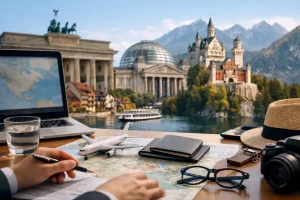
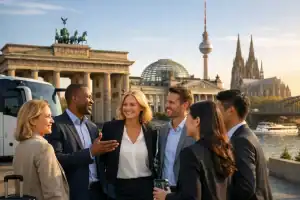
A missed transfer for five executives can derail a client dinner. A poorly timed check-in for 120 attendees can delay an opening session. Corporate travel at group scale is rarely undone by big ideas — it is undone by small details handled too late. That is why a strong corporate group travel guide matters, especially when Germany is the destination and expectations are high.
For international companies, agencies, and meeting planners, Germany offers a compelling mix of business infrastructure, global air access, distinctive venues, and cultural depth. It is an excellent choice for conferences, incentive programs, leadership offsites, product launches, and executive gatherings. It is also a market where precision matters. Standards are high, lead times can be tight, and successful delivery depends on knowing how local logistics, suppliers, and attendee expectations work in practice.
What a corporate group travel guide should actually cover
A useful corporate group travel guide is not a checklist copied from a generic travel blog. It should help decision-makers reduce operational risk while improving the attendee experience. That means balancing strategy with execution.
At the strategic level, the guide should answer foundational questions. What is the purpose of the program? Is the event designed to motivate top performers, align leadership, impress clients, or deliver formal content to a wider audience? Those goals shape every downstream decision, from city selection to transportation flow to the tone of the gala dinner.
At the operational level, the guide should address the moving parts that tend to create friction: airport arrivals, hotel allocations, meeting space suitability, branded touchpoints, dietary requirements, local compliance, and realistic timing between venues. In corporate group travel, ambitious agendas often look excellent on paper and fail in transit. The right planning framework filters out ideas that are visually attractive but operationally weak.
Choosing the right destination in Germany
Germany is not a one-size-fits-all destination. Berlin, Munich, Frankfurt, Hamburg, Cologne, and Düsseldorf each support corporate events well, but they do so in different ways.
Berlin works best when the brief calls for creative energy, historical depth, and a broad range of event formats. It is strong for conferences, product presentations, and multi-day programs that mix business sessions with memorable evening experiences. Venue variety is a major advantage, from contemporary meeting spaces to architectural landmarks.
Munich is often the right fit for premium incentives, executive meetings, and high-class services with a polished atmosphere. It combines strong hospitality standards with easy access to Alpine scenery, automotive experiences, and refined dining. For companies that want prestige without feeling overly formal, Munich performs well.
Frankfurt is practical, efficient, and highly effective for international attendance. With one of Europe’s key aviation hubs, it simplifies arrival patterns for global groups. It may not always be the first city clients describe as inspirational, but for conventions, financial sector meetings, and short-format business events, efficiency is often the stronger priority.
Hamburg brings a different tone — elegant, maritime, and well suited for groups that want a sophisticated backdrop with less predictability. Cologne and Düsseldorf are equally valuable depending on audience profile, trade fair alignment, and venue needs. The right choice depends on program goals, guest demographics, and budget tolerance, not on popularity alone.
Budget planning without losing quality
Budget pressure is common, even for premium programs. The mistake is assuming cost control means cutting visible quality. In reality, good budget management comes from smart allocation.
Room nights, venue rental, food and beverage, transportation, and production usually drive the largest costs. That sounds obvious, but the real issue is where hidden overruns appear. Late changes in attendee numbers, poorly sequenced transfers, underestimating staffing needs, and selecting a venue that requires extensive technical build-out can all stretch a budget quickly.
This is where local expertise becomes commercially valuable. A venue that looks ideal may carry restrictions on access hours, supplier use, or rigging. A hotel that appears competitive may be farther from the meeting venue than the schedule can realistically support. A cheaper dinner location may require so much additional transport coordination that the savings disappear.
The most effective programs are not always the most expensive. They are the ones designed with cost discipline from the beginning, where every line item supports the experience and nothing is included simply because it is customary.
The logistics that shape the guest experience
Guests rarely comment on flawless transportation because they notice it only when it fails. Yet transport design is one of the clearest indicators of professional event management.
Airport meet-and-greet services, baggage handling, executive transfers, coach scheduling, and contingency planning must work as one system. This becomes more important when attendees arrive from multiple markets on different schedules or when VIP guests require a separate service standard. In Germany, timing expectations tend to be exact. If a program says departure is at 6:15 p.m., the operation should be built to support that standard.
Accommodation strategy matters just as much. For some groups, placing everyone in one flagship hotel creates cohesion and simplifies control. For others, a two- or three-hotel setup is more realistic due to inventory, rate structure, or attendee profile. Neither approach is automatically better. It depends on group size, event flow, and whether networking or convenience is the higher priority.
Attendee administration is another area where polished execution separates average delivery from premium delivery. Registration data, rooming lists, arrival tracking, dietary notes, name changes, and on-site communication all need disciplined management. These are not glamorous tasks, but they are often the difference between a calm program and a reactive one.
Why venue selection is more than aesthetics
Some venues photograph beautifully and function poorly. Others appear understated in early proposals and perform exceptionally once the event begins. A refined corporate group travel guide should make that distinction clear.
Venue scouting is about guest flow, acoustics, access, service standards, branding potential, technical readiness, and operational flexibility. A historic property may offer the atmosphere clients want, but heritage restrictions can limit production options. An industrial venue may create impact for a product launch, but weather planning, sound control, or guest transportation may require more support than expected.
The best venues in Germany do more than impress. They support the event objective. A leadership summit may require discretion, controlled access, and elegant private dining. A sales kickoff may need high-capacity plenary space and energetic breakouts. An incentive dinner should feel exceptional from the first arrival moment, not just once guests are seated.
This is where bespoke program design earns its place. Distinctive venues that will take your breath away are valuable only when they also work operationally.
Building the right mix of business and experience
Corporate groups do not travel to Germany only to sit in meeting rooms. Even highly structured programs benefit from a sense of destination.
The most effective itineraries create rhythm. A morning of formal content can be followed by a private museum visit, a harbor experience, a castle dinner, or a hands-on team activity that feels thoughtful rather than forced. Incentive groups may want access and exclusivity. Conference attendees may need shorter, lighter cultural moments that fit around content-heavy days.
There is a trade-off here. Overprogramming can exhaust guests and dilute impact. Underprogramming can make an international trip feel generic. The right balance depends on audience energy, seniority, and why the group is traveling in the first place.
For many clients, Germany is strongest when business credibility and cultural character appear together. That may mean pairing a modern convention environment with regional cuisine, heritage architecture, automotive experiences, or seasonal programming that feels specific to the destination instead of imported from a standard event playbook.
Working with a local DMC partner
For complex programs, a local destination management company is not simply a vendor layer. It is often the structure that holds the entire program together.
A strong DMC brings supplier relationships, destination intelligence, quality control, and realistic planning from the earliest stages. That includes knowing which hotels can truly handle VIP-heavy arrivals, which venues deliver premium service consistently, which routing plans work during major citywide dates, and where the hidden risks sit inside an otherwise attractive proposal.
For overseas planners and corporate teams, this local support reduces guesswork. It also improves speed. When timelines are compressed, you need accurate answers quickly, not a series of assumptions that create corrections later. My German DMC is built around that principle — precise execution, tailored planning, and one accountable partner across travel, meetings, logistics, and guest experience.
Common mistakes that cost more than money
The most expensive errors in corporate group travel are often not financial first. They affect confidence.
Choosing a destination before clarifying the program objective leads to mismatched venues and weak flow. Building an agenda without realistic transfer timing creates late starts and guest frustration. Treating accommodation, transportation, and event production as separate workstreams often produces a disconnected attendee experience. And leaving local sourcing too late can narrow quality options fast, especially in major German cities during trade fair periods and peak event seasons.
There is also a softer mistake that matters. Some programs are planned entirely from the organizer’s point of view rather than the guest’s. Guests remember how easy the arrival felt, whether the pace was comfortable, whether the dining felt considered, and whether the overall experience reflected the status of the invitation. Precision and hospitality need to appear together.
A well-planned program should feel effortless to attendees even when the operation behind it is highly detailed. That is the standard worth aiming for, and it starts long before the first guest boards a flight.