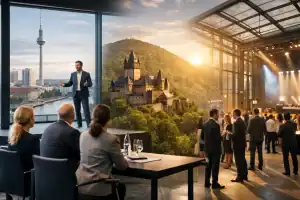
A gala dinner can elevate an entire program — or expose every weakness in it. The right gala dinner venues Germany offers do far more than provide a beautiful room. They shape guest perception, support smooth logistics, and create the kind of atmosphere that makes a corporate event feel genuinely worth attending.
For international planners, Germany is especially strong in this category. It combines architectural range, excellent infrastructure, and service standards that suit high-level business events. You can host an awards dinner in a historic palace, a client reception in an industrial landmark, or a formal evening in a contemporary rooftop space with skyline views. The opportunity is broad, but the best choice depends on far more than aesthetics.
What makes gala dinner venues Germany stand out
Germany works well for gala dinners because it offers both prestige and operational control. That matters for corporate groups. A venue may look exceptional in photos, but if access is difficult, load-in is restricted, or guest flow is awkward, the evening quickly becomes more complicated than it needs to be.
What sets Germany apart is the combination of character venues and dependable event infrastructure. In cities such as Berlin, Munich, Frankfurt, Hamburg, and Cologne, planners can access spaces with strong production capability, experienced hospitality teams, and reliable transport connections. That makes a difference when your dinner is not a standalone social event, but part of a wider conference, incentive, or executive program.
The variety is another advantage. Germany is not a one-style destination. Some clients want heritage and grandeur. Others want minimalism, design-led interiors, and a sharper contemporary edge. Both are available, and both can be executed at a premium level.
Choosing the right gala dinner venue in Germany
The most successful venue decisions start with the purpose of the evening. A leadership dinner for 80 guests requires a different setting than a 500-person awards gala. A luxury automotive brand may need architectural drama and polished production, while a pharmaceutical company may prioritize privacy, compliance, and tightly managed timing.
Guest experience should come first, but operational reality needs equal weight. Capacity is the obvious starting point, yet usable capacity matters more than headline numbers. A venue that fits 300 guests for a reception may not comfortably accommodate 300 for a staged dinner with entertainment, branding, and technical equipment.
Location also deserves close scrutiny. City-center venues often simplify transfers and support stronger attendance, especially when guests are already staying near the meeting hotel. On the other hand, a castle or estate outside the city can create stronger emotional impact. The trade-off is transport planning, timing discipline, and occasionally higher production complexity.
Then there is the question of exclusivity. For high-profile corporate groups, a semi-public restaurant buyout may not offer the level of control required. A fully privatized venue provides better branding opportunities, greater security, and a more coherent guest journey from arrival through departure.
Venue styles that work for corporate gala dinners
Historic castles and palaces
For formal gala evenings, castles and palatial venues remain some of the most impressive choices in Germany. They bring instant prestige and work particularly well for incentive groups, anniversary celebrations, and customer events where atmosphere matters as much as agenda.
That said, heritage venues are not automatically the right answer. Some have restrictions on rigging, staging, noise levels, or access times. Others are visually extraordinary but less practical for large-scale production. The best results come when historical elegance is matched by a professional event setup behind the scenes.
Luxury hotels with grand ballrooms
For planners who value efficiency, luxury hotels are often the most reliable option. They offer integrated event services, experienced banquet teams, and the advantage of keeping guests, meeting space, and dinner venue under one roof or within the same complex.
This can be the smartest route for conferences with tight schedules or international groups arriving on multiple flights. While hotel ballrooms may feel less distinctive than standalone landmarks, strong styling, lighting, and entertainment can transform them into high-class evening settings with far less logistical risk.
Industrial and contemporary event spaces
Germany has an excellent selection of converted factories, design venues, and architecturally bold event locations. These spaces suit brands that want a modern tone rather than traditional formality. They are especially effective for product launches, media dinners, and gala formats that blend dining with performance or immersive brand elements.
The advantage here is flexibility. Industrial venues often allow more ambitious staging, custom layouts, and stronger visual branding. The trade-off is that they may require more build-out, more technical planning, and more coordination across multiple suppliers.
Rooftops, museums, and cultural landmarks
For groups looking to impress without becoming overly ceremonial, rooftops and cultural venues can strike the right balance. A museum dinner or skyline reception feels memorable and polished, but also more current. These spaces work well for executive audiences, international delegates, and clients who want something distinctive without the formality of a palace setting.
Their availability, however, can be tightly controlled. Many operate around public opening hours, conservation rules, or limited event windows. Planning ahead is essential.
Best cities for gala dinner venues in Germany
Berlin offers the broadest stylistic range. It is ideal for planners who want creative freedom, whether in a historic property, a bold industrial venue, or a contemporary architectural space. The city suits brands that want energy, contrast, and a strong sense of destination.
Munich delivers classic elegance. Its gala dinner landscape leans refined, polished, and premium, making it a natural fit for luxury-oriented events, executive groups, and formal corporate celebrations. Service levels are generally strong, and the city pairs well with high-end hospitality programs.
Frankfurt is highly practical for international business events. With its airport connectivity, concentration of premium hotels, and efficient event ecosystem, it works particularly well for conferences and client dinners where schedule control is critical. The venue style may feel more business-led than romantic, but for many corporate groups that is an advantage.
Hamburg brings waterfront atmosphere and understated sophistication. It suits companies that want a gala setting with character and a slightly more exclusive feel. Historic warehouses, maritime venues, and elegant private locations make the city especially appealing for evening events with a strong sense of place.
Cologne and the Rhine region are also worth serious consideration. They offer access to distinctive venues, good infrastructure, and a strong blend of historic and modern settings. For planners combining business with regional culture, this area can be particularly effective.
Planning details that protect the guest experience
A strong venue is only part of the result. Gala dinners succeed when guest flow, timing, catering, technical production, and transportation are all aligned. This is where many beautiful concepts fail. If guests wait too long for transfers, struggle with registration, or sit through uneven service pacing, the room itself cannot compensate.
Menu planning matters more than many teams expect. International groups often require broad dietary coverage, and the best gala experiences balance local character with international appeal. A highly regional menu can be memorable, but only if it remains accessible to a diverse audience.
Entertainment and production should also match the room. Not every venue suits a full live band, aerial performance, or large LED stage. In some cases, a more restrained format feels more premium. The right answer depends on ceiling height, acoustics, sightlines, and the tone of the event.
Transfers deserve special attention for off-site venues. Germany’s infrastructure is strong, but evening traffic, trade fair periods, and city-specific regulations still affect timing. Precision here protects the entire schedule.
Why local venue knowledge makes a difference
On paper, many venues look interchangeable. In practice, they are not. Two spaces with similar capacity and style can perform very differently once catering access, technical restrictions, neighborhood limitations, and guest routing enter the picture.
That is why local knowledge has real commercial value. It shortens the decision process, reduces risk, and helps planners avoid venues that are attractive in theory but difficult in execution. An experienced local partner can also secure better-fit options, align venue choice with the broader program, and manage the details that shape the final impression.
For corporate groups investing in Germany, that level of control is not a luxury. It is part of delivering an event that feels polished from the first arrival to the final departure. My German DMC supports that process with venue scouting, supplier coordination, transportation planning, and end-to-end event management built for premium B2B programs.
The best gala dinner is rarely the one with the most dramatic photos. It is the one guests remember as effortless, impressive, and perfectly timed — exactly as a high-stakes corporate evening should be.
nn
Looking for professional support? Explore our gala dinner venues Germany and get a personalised proposal for your next event in Germany.