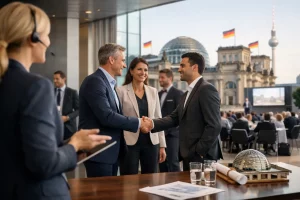
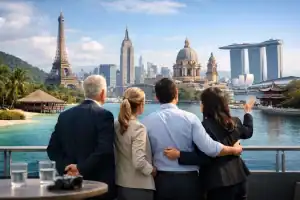
The destination decision often comes down to one practical question: should the reward feel metropolitan and varied, or alpine and intimate? Germany versus Austria incentive travel is not a contest with a universal winner. Both deliver exceptional hospitality, polished infrastructure, and memorable cultural experiences. The right choice depends on your group profile, program objectives, preferred pace, and the level of logistical complexity your organization is prepared to manage.
For international companies, Germany offers breadth, connectivity, and a remarkable range of settings within one program. Austria brings a concentrated sense of place, where imperial culture, mountain scenery, and refined traditions can create an especially personal reward. A well-designed incentive should use those strengths deliberately rather than selecting a destination based on image alone.
Germany Versus Austria Incentive Travel: The Strategic Difference
Germany is often the stronger choice when an incentive needs to serve varied interests at scale. A group can arrive through major international gateways, meet in a design-led urban hotel, hold a gala in a historic industrial landmark, and spend the following day in vineyard country or on a private river cruise. Berlin, Munich, Hamburg, Frankfurt, Cologne, and Düsseldorf each present a distinct character, giving planners considerable freedom to match the city to the brand and audience.
Austria is particularly compelling when atmosphere is central to the reward. Vienna offers grand architecture, classical music heritage, elegant coffeehouse culture, and palaces that set a high-class tone without feeling contrived. Salzburg combines baroque charm with a dramatic Alpine backdrop, while the Tyrol creates immediate appeal for active groups and winter-focused programs. The experience can feel more cohesive because the visual identity is so strong from arrival onward.
The trade-off is choice versus concentration. Germany makes it easier to build a multi-dimensional itinerary for a diverse delegation. Austria can make a shorter program feel deeply immersive, especially when the purpose is recognition, relationship building, or an elevated executive retreat.
Arrival Access and Ground Logistics
For groups traveling from multiple U.S. and international markets, Germany generally provides the broadest air access. Frankfurt and Munich are major long-haul hubs, while Berlin and Düsseldorf offer strong European connections. This can reduce the number of complicated routings and give attendees more flexibility in their flight choices. Germany’s rail network also supports efficient city-to-city transfers when a program includes more than one destination.
Austria is highly accessible through Vienna, with Salzburg and Innsbruck serving specific regional needs. For a Vienna-based program, arrival procedures and transfers can be exceptionally straightforward. However, an itinerary involving mountain resorts may require a longer coach journey or a regional flight connection, particularly in winter conditions. That is not a disadvantage when the mountain setting is the reward itself, but it should be planned as part of the guest experience rather than treated as a minor transfer.
In both countries, transport needs careful timing around city access restrictions, luggage handling, security requirements, and late-arriving guests. The difference is often less about distance than about how many moving parts a program contains. Germany is ideal for groups that need options; Austria rewards planners who want to focus every detail around a clearly defined setting.
Venues That Shape the Incentive Experience
Germany’s venue inventory is unusually versatile. A gala dinner may take place in a royal residence outside Munich, a contemporary art venue in Berlin, a waterside warehouse in Hamburg, or a historic wine estate along the Rhine. For brands that want their incentive to feel original rather than formulaic, this variety is a major asset. It also supports mixed-format programs, where business content, celebration, and cultural discovery need distinct environments.
Austria excels at formal elegance and scenic drama. Vienna’s palaces, museums, concert halls, and private salons offer venues that will take your breath away while maintaining the service standards expected by senior guests. Salzburg adds intimate historic spaces and fortress settings, while alpine properties can host fireside dinners, mountain lunches, and exclusive events with panoramic views.
Venue selection should be driven by the emotional tone of the incentive. A technology company introducing a future-facing leadership initiative may find Berlin’s creative energy more fitting. A luxury brand recognizing top performers may prefer a Vienna palace dinner followed by a private musical performance. Neither approach is inherently more premium. Premium is created by relevance, access, service, and flawless delivery.
Experiences: Variety in Germany, Signature Moments in Austria
Germany provides a broad palette of experiences that can be tailored well beyond familiar stereotypes. Consider a behind-the-scenes automotive program near Stuttgart, a private museum evening in Berlin, a chef-led market experience in Hamburg, or a vineyard reception in the Mosel or Rhine regions. In Bavaria, guests can combine mountain views, traditional craftsmanship, and refined gastronomy without losing access to five-star hotels and professional event infrastructure.
Austria’s signature experiences are often more immediately recognizable. A private concert in Vienna, a dinner in a historic palace, a carriage arrival, a Mozart-inspired evening in Salzburg, or a guided Alpine activity can create a powerful sense of occasion. These moments are especially effective for smaller groups, incentive winners, and executive audiences who value intimacy and cultural depth.
Season changes the equation. Germany is strong year-round, with Christmas markets, city culture, spring gardens, summer river programs, and autumn wine harvests offering distinct themes. Austria is equally appealing, but its contrast between winter mountain programs and summer cultural escapes is more pronounced. A ski incentive in the Tyrol can be exceptional, while Vienna in December provides a festive, formal alternative to a resort-based reward.
Budget, Scale, and the Real Cost of Ambition
Neither destination should be selected on hotel rates alone. Incentive budgets are shaped by air access, transfer patterns, venue exclusivity, staffing, catering standards, entertainment, branding, and the level of personalization required. A program that appears less expensive on paper can become more costly if its logistics require multiple vehicles, extended transfer times, or extensive supplier coordination.
Germany can offer strong value for larger groups because of its hotel capacity, event infrastructure, and competition among suppliers in major cities. It is also well suited to programs with different arrival dates, breakout requirements, and large-scale gala production. Munich and Frankfurt may command premium pricing during major trade fairs, while Berlin and Hamburg can present different availability patterns. Date flexibility matters.
Austria can be highly cost-effective for a focused Vienna program, particularly when attendees stay, dine, meet, and experience the city within a compact radius. Alpine resorts require more careful budgeting during peak ski periods, when inventory is limited and demand is high. For the right audience, however, the visual impact and exclusivity of the setting justify the investment.
Which Destination Fits Your Group?
Choose Germany when the program requires broad international access, large-group capacity, a choice of city identities, or an itinerary that combines business sophistication with diverse cultural experiences. It is a particularly confident choice for organizations that need operational resilience, flexible supplier options, and a destination that can accommodate complex attendee management without compromising on style.
Choose Austria when the incentive calls for a more concentrated luxury experience, a strong cultural narrative, or an Alpine setting that becomes part of the reward. Vienna is superb for elegant executive programs; Salzburg and the Tyrol are natural fits when scenery, heritage, and a sense of escape are essential.
For some organizations, the best answer is not either-or. A carefully managed Munich and Salzburg itinerary can pair German efficiency with Austrian charm, provided the group size, transfer schedule, and border logistics support it. This approach works best when the journey itself adds value rather than taking time away from the program.
The most successful incentive destination is the one that makes every guest feel recognized while giving planners confidence in every operational detail. Share your audience profile, business objectives, travel dates, and desired level of exclusivity with My German DMC, and the destination can be shaped into a program that feels distinctive from the first welcome to the final farewell.