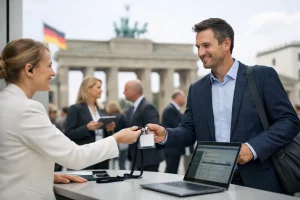
A group arrival is the first live test of an event program. Guests may forgive a short line at registration later in the day, but they will remember standing in an unfamiliar airport without clear instructions, transport, or a visible point of contact. For international corporate groups arriving in Germany, the welcome experience must feel composed from the moment the aircraft doors open.
Knowing how to coordinate group arrivals means managing far more than vehicle bookings. It requires a precise operating plan that accounts for flight patterns, terminal layouts, luggage timing, guest profiles, traffic conditions, and the inevitable exceptions that occur on travel day. When those details are controlled, guests arrive at the hotel or venue feeling expected, informed, and well looked after.
Start with a realistic arrival map
The first step is to build one verified arrival map, not a collection of airline confirmations scattered across inboxes. Record every flight number, scheduled landing time, origin, terminal, airline, passenger count, class of travel, and named VIPs. Include mobile numbers where appropriate, but treat personal data carefully and share it only with the team members who need it.
Do not plan transport around the scheduled touchdown time alone. International arrivals need time for taxiing, deplaning, passport control, baggage collection, customs, and movement through the terminal. At major hubs such as Frankfurt or Munich, that duration can vary considerably by terminal, nationality, baggage volume, and time of day. A group flying in from within the Schengen Area follows a different path from one arriving from the United States or Asia.
Create arrival waves rather than treating every flight as an isolated movement. If 60 guests land within a two-hour window, determine which arrivals can be consolidated without creating uncomfortable waits and which require dedicated service. The right answer depends on the group’s seniority, flight duration, itinerary pressure, and budget. A leadership group heading straight to a private dinner may warrant individual transfers; a larger incentive group may benefit from carefully timed coaches and a hosted welcome point.
Build time buffers around the guest experience
A buffer is not wasted time when it protects the program. Allow contingency for delayed baggage, immigration queues, missed connections, road works, and hotel check-in congestion. In Germany, punctuality is expected, but precision also means acknowledging variables before they become problems.
The most effective plans include a defined decision point. For example, a coach may depart once all guests are present or after a stated maximum wait, with a private transfer arranged for late arrivals. This decision should be agreed upon in advance, communicated clearly, and recorded in the operating schedule. On-the-day improvisation is where unnecessary cost and guest frustration often begin.
Put one team in charge of group arrival coordination
Guests should never have to work out who is responsible. Establish a single operational lead for the arrival program, supported by airport hosts, transport dispatchers, hotel contacts, and an event manager. Each person needs a clear role, direct contact details, and the authority to make defined decisions.
For complex programs, a live movement sheet is essential. It should show flight status, actual arrival time, guest count on board, host assignment, vehicle number, departure status, destination, and any exceptions. The document must be accessible to the people delivering the service, not simply prepared for the planning file.
A reliable communication structure typically includes one internal operations channel and one guest-facing channel. Internally, the team exchanges real-time status updates. Externally, guests receive concise, relevant instructions without being exposed to operational noise. A senior executive does not need a stream of dispatch messages; they need to know exactly where to go and whom to call.
Brief suppliers as one service team
Airport meet-and-greet staff, chauffeurs, coach drivers, hotel reception teams, and venue contacts all influence the first impression. Brief them from the same version of the plan. Confirm flight details, meeting locations, signage requirements, luggage handling, vehicle standards, destination addresses, and emergency contacts.
In practice, the details that seem small are often the details guests notice. Is the welcome sign easy to spot at the correct exit? Does the driver know the preferred route and the hotel’s coach access point? Is bottled water available after a long-haul journey? Is a host prepared to direct guests to restrooms or an airport lounge if a vehicle is delayed? Premium service is visible in these moments.
Give guests instructions they can use under pressure
Arrival communications should be sent before travel, ideally in a concise format that works on a phone. Explain where guests will meet their host, what signage to look for, the host’s phone number, what to do if luggage is delayed, and what happens if their flight is canceled or rerouted.
Avoid generic instructions such as “meet at arrivals.” Large airports have multiple exits, levels, and terminal zones. Specify the terminal, exit, and landmark where possible. If the group is using Frankfurt Airport, for example, instructions should distinguish between terminals and arrival halls rather than assuming familiarity.
For guests traveling independently, provide the same standard of clarity. Share the hotel address, approved transfer process, check-in guidance, and a point of contact who can assist outside regular office hours. Independent arrivals should still feel part of the event, not like an administrative exception.
Match transportation to the program, not just the headcount
The lowest-cost vehicle arrangement is not always the most efficient choice. One large coach may look economical on paper, but it can become expensive if it waits too long, cannot access the hotel entrance, or forces guests to arrive far earlier than their rooms are available. Equally, too many small vehicles can complicate dispatch and dilute the hosted experience.
Consider luggage volume, not only passenger seats. Incentive groups often travel with larger cases, event materials, gifts, or equipment. Confirm vehicle luggage capacity separately, especially for airport transfers involving executive sedans, vans, and premium minibuses.
Also plan the arrival at the destination. A beautiful hotel or historic venue may have limited curbside access, restricted coach parking, or a narrow entrance unsuitable for larger vehicles. The final 100 yards matter as much as the journey from the airport. A site inspection and local transport knowledge prevent unwelcome surprises.
Prepare for disruption before it happens
No arrival plan is immune to disruption. Weather, air traffic restrictions, strikes, luggage delays, and missed connections can affect even the best-planned program. The difference lies in whether your team has already decided how to respond.
Set practical contingency rules in advance. Identify backup vehicles, late-night transfer options, alternate airport hosts, and a hotel contact for delayed check-ins. For high-value groups, consider tracking key flights and assigning a dedicated coordinator to monitor changes throughout the arrival window.
When a disruption occurs, communicate early and with confidence. Tell affected guests what has changed, what is being arranged, and when they will receive the next update. Do not promise a precise outcome until it is confirmed. A calm, accurate message protects trust better than an optimistic estimate that later changes.
Make the welcome feel intentional
Operational precision should never make an arrival feel mechanical. The first transfer is an opportunity to introduce the destination, set the tone of the program, and give guests a moment to reset after travel. A knowledgeable host, a refined welcome gesture, and thoughtful timing can transform a necessary transfer into the opening chapter of the event.
This is especially valuable in Germany, where a corporate program may move quickly from airport to hotel, conference center, gala venue, or cultural experience. Guests who know what comes next feel more relaxed and more ready to participate. A short, well-judged briefing during the transfer can cover the evening schedule, local practicalities, and the highlights awaiting them.
My German DMC coordinates arrivals as part of a wider event journey, aligning airport hospitality, premium transport, hotel readiness, and the first program touchpoint. That joined-up approach is what allows the welcome to feel effortless to guests while remaining tightly controlled behind the scenes.
A well-managed group arrival does not call attention to its complexity. It gives every guest the reassuring sense that someone has anticipated the details before they had to ask.