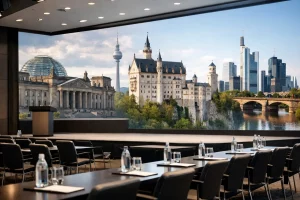
A board meeting in a restored Berlin landmark can make an international leadership group feel that the destination was chosen with real intention. The same agenda in a purpose-built congress facility may give the production team exactly what it needs: reliable infrastructure, flexible breakout capacity, and efficient guest flow. In the conference center versus historic venue decision, neither setting is inherently superior. The right choice depends on what the event must accomplish, who will attend, and how much operational complexity the program can reasonably carry.
For corporate groups coming to Germany, venue selection is not simply an aesthetic exercise. It affects registration, transportation timing, accessibility, catering, technical production, security, and the lasting impression your guests take home. A well-chosen venue turns the destination into part of the event strategy. A poorly matched one can leave even an excellent agenda feeling constrained.
Conference Center Versus Historic Venue: Start With the Event Objective
The first question is not whether guests would prefer a grand ballroom or a modern auditorium. It is what success looks like when the event is over.
If the priority is knowledge transfer, high-volume content delivery, product education, or a multi-track convention, a conference center is usually the more disciplined choice. Purpose-built facilities are designed for scale. They typically offer divisible plenary halls, multiple breakout rooms, established loading access, integrated registration areas, high-capacity Wi-Fi, and technical teams familiar with demanding production schedules. For a congress of several hundred or several thousand delegates, these features reduce risk in meaningful ways.
A historic venue is often the stronger choice when the objective is relationship building, recognition, celebration, or brand positioning. A former royal residence, industrial landmark, museum, castle, or heritage hotel immediately gives guests a sense of place. It can elevate a gala dinner, executive retreat, client reception, or incentive program beyond the standard corporate format. Germany offers remarkable settings of this kind, from grand city venues to distinctive regional estates.
The distinction is not absolute. A historic venue can host a serious business program, and many modern conference centers offer impressive architecture and premium hospitality. The key is to match the venue’s inherent strengths to the emotional and operational demands of the program.
Where Conference Centers Deliver Their Greatest Value
Conference centers are built around predictability. That matters when attendee numbers are high, agendas are dense, or the event includes complex staging, simultaneous interpretation, sponsor areas, exhibitions, and frequent room changes.
Technology and Production Reliability
For content-heavy meetings, infrastructure is often the deciding factor. Modern conference centers generally have the power supply, ceiling rigging, acoustics, bandwidth, lighting positions, and back-of-house areas required for polished production. Their teams understand rehearsals, speaker management, technician access, and the fast adjustments that occur during live programs.
This does not mean a historic venue cannot support a sophisticated production. It can, but it may require more temporary equipment, earlier installation windows, specialized approvals, and closer coordination with the building’s management. Those requirements can increase both budget and planning time.
Capacity, Breakouts, and Guest Flow
When 500 delegates must move from a plenary session to 12 workshops, then into a networking lunch without delay, space planning becomes a critical service consideration. Conference centers tend to offer intuitive circulation, dedicated registration zones, elevators sized for large groups, and rooms configured to accommodate professional schedules.
They are also often more forgiving when attendance changes late in the planning process. A larger facility may allow organizers to add a breakout room, expand exhibition space, or create a private meeting area without reengineering the entire event footprint.
Accessibility and Compliance
International groups should not have to navigate difficult staircases, uneven courtyards, or limited restroom facilities simply to attend a business session. Purpose-built venues are more likely to have comprehensive accessibility features, straightforward emergency procedures, and modern climate control. For organizations with strict duty-of-care standards, this can carry significant weight.
Why Historic Venues Create a Different Kind of Impact
Historic venues are not just backdrops. When selected thoughtfully, they create a shared experience that guests cannot replicate in another city. That distinction is especially valuable for incentive groups, customer events, board-level gatherings, and gala occasions where the atmosphere should feel personal rather than procedural.
A Stronger Sense of Destination
A meeting room can deliver a presentation. A historic venue can tell a story before the first speaker reaches the stage. Guests may arrive through a grand courtyard, dine beneath ornate ceilings, or gather in spaces connected to art, industry, or regional heritage. These details give a Germany program character and make the itinerary feel curated rather than interchangeable.
For international attendees, this can be particularly effective when paired with local cuisine, music, guided cultural elements, or a carefully designed arrival experience. The venue becomes an authentic part of the host destination, not merely a location for dinner.
Exclusivity and Brand Expression
Historic properties can support a more intimate, high-class event atmosphere. An executive dinner in a private palace salon or a client reception in a museum after hours signals attention, investment, and confidence. For premium brands, this setting can reinforce values such as craftsmanship, heritage, innovation, or discretion.
However, exclusivity should be evaluated honestly. Some historic venues feel extraordinary at 80 guests but crowded at 250. Others have spectacular main rooms but insufficient space for a proper reception, wardrobe, registration desk, or breakout sessions. A site inspection and detailed floor plan are essential before making assumptions based on photographs.
The Trade-Off: Character Requires Coordination
A protected building may have rules around candles, amplified music, branding, delivery times, drilling, open flames, or structural installations. Its loading route may be narrow, its elevators small, and its access times tightly controlled. Catering may need to work from a satellite kitchen. Coaches may have to stop several blocks away due to city-center restrictions.
None of these factors make a historic venue unsuitable. They simply demand experienced project management. With the right schedule, supplier coordination, guest communications, and contingency planning, the result can be exceptional. Without that structure, the same constraints can affect timing and guest comfort.
Assess the Full Program, Not Just the Main Event
Venue decisions often fail when organizers assess only the plenary room or gala space. The better approach is to map the entire attendee journey: airport arrival, hotel location, transfers, registration, meetings, dining, evening programming, and departure.
A conference center near major hotels and transport connections may save valuable time for a one-day convention. If delegates are arriving independently from different countries, easy rail or airport access can outweigh the appeal of a more remote heritage property. Conversely, an incentive group staying in a luxury countryside hotel may benefit from a historic venue that creates a complete, immersive escape from everyday business routines.
In Germany’s major cities, the distance between hotel and venue deserves special attention. A short journey on a map can become less convenient when it involves peak traffic, restricted coach access, event-day security measures, or a large group crossing a busy pedestrian district. The operational plan should account for luggage, weather, mobility needs, and the time guests need to move comfortably between program elements.
Budget Beyond the Venue Rental
Comparing rental fees alone can be misleading. Conference centers may appear more expensive initially, but their standard infrastructure can reduce production, furniture, staffing, and security costs. They may also offer package pricing that makes budgeting more transparent.
Historic venues sometimes have a lower base rental while requiring additional investment in temporary lighting, sound, heating or cooling, generators, tenting, flooring protection, transportation, or external catering logistics. On the other hand, the venue’s atmosphere may reduce the need for elaborate décor because the setting already delivers visual impact.
The most useful budget comparison is a like-for-like event estimate. Include technical specifications, labor hours, setup and strike times, guest transfers, permits, furniture, catering requirements, and weather contingencies. This is where local destination expertise protects both the event experience and the final cost.
A Hybrid Format May Be the Strongest Answer
For many corporate programs, the best choice is not a strict either-or decision. A conference center can host the daytime meeting agenda, while a historic venue becomes the setting for the evening reception or gala dinner. This combination gives delegates the efficiency they need during business hours and the memorable destination experience they expect from an international program.
It is particularly effective for conferences that welcome overseas attendees. The modern venue supports content delivery, sponsor visibility, and attendance management. The historic evening setting provides a sense of reward, creates conversation, and makes the trip feel distinctive.
My German DMC regularly evaluates these combinations through the lens of guest experience and execution, not venue style alone. The goal is to create a program that feels elevated at every stage while remaining precisely managed behind the scenes.
Make the Decision With Operational Confidence
The most impressive venue is the one that supports your agenda, reflects your organization, and allows guests to feel well cared for from arrival to departure. Choose a conference center when scale, technology, flexibility, and predictable logistics lead the brief. Choose a historic venue when destination character, exclusivity, and emotional impact carry greater value.
Before committing, request a detailed feasibility review that tests capacity, technical requirements, access, hotel proximity, transportation, and contingency plans against your actual program. When the venue choice is grounded in both ambition and operational detail, Germany can deliver an event that feels genuinely memorable and performs exactly as it should.