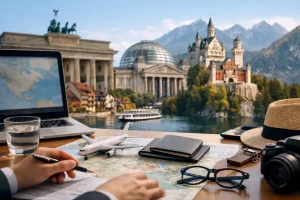
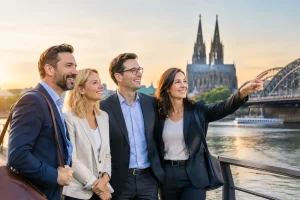
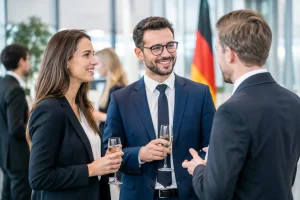
A ballroom filled with delegates is no longer enough to justify a flight across the Atlantic. For international planners, the future of corporate events in Germany is defined by a higher standard: every meeting must make commercial sense, feel personally worthwhile, and run with total operational control. Germany is exceptionally well positioned for this shift, combining global connectivity, strong infrastructure, distinctive cities, and a culture that respects preparation.
The most successful events will not simply be larger or more technically advanced. They will be more intentional. They will pair a clear business objective with an experience that gives attendees a genuine reason to be present, whether that means a leadership retreat in the Bavarian Alps, a client summit in Berlin, or an incentive program built around the Rhine’s wine country.
The Future of Corporate Events in Germany Is More Selective
Corporate travel budgets are under closer review, and attendees are more selective about how they spend their time away from home. As a result, planners are moving away from crowded agendas and interchangeable conference formats. The question is no longer only, “How many people can we host?” It is, “What should this group accomplish together that cannot be achieved through a screen?”
Germany offers a compelling answer because its destinations can support both serious business content and memorable shared moments. Frankfurt delivers international access and financial-sector credibility. Munich combines premium hospitality with Alpine proximity. Berlin brings creative energy and bold venues. Hamburg offers maritime character, sophisticated hotels, and a strong sense of place. Düsseldorf, Cologne, Dresden, Stuttgart, and Nuremberg each bring their own strengths for groups that want a less predictable setting.
For planners, the opportunity lies in choosing a city based on event purpose rather than reputation alone. A product launch may benefit from Berlin’s contemporary architecture and cultural edge. A board meeting may require the discretion and polished service of a five-star Munich property. A sales incentive may call for a program that moves beyond the city center and into vineyards, castles, private estates, or regional culinary experiences.
Experience Design Will Carry More Weight
The era of generic gala dinners and standard sightseeing is fading. Corporate guests increasingly expect programming that feels connected to the destination and tailored to the group. This does not mean every event needs spectacle. It means the experience should have a point of view.
A well-designed Germany program can place a private dinner in a historic residence, followed by a chamber music performance; turn a team challenge into a meaningful exploration of Hamburg’s harbor district; or create a hands-on culinary session with regional chefs instead of another formal banquet. These moments create the conversations attendees remember long after the final presentation.
The trade-off is clear: highly customized programming demands more planning, stronger supplier relationships, and careful attention to timing. A venue that will take your breath away may be located outside the main hotel district. A private cultural experience may have limited capacity. The best concepts account for these realities early, rather than treating logistics as an afterthought.
Premium Does Not Have to Mean Excessive
Premium event design is increasingly measured by relevance, access, and service quality, not by unnecessary extravagance. A smaller dinner in an exceptional setting can be more effective than a large, impersonal reception. An exclusive behind-the-scenes visit can create more value than a costly entertainment act with no connection to the destination.
This approach also serves diverse attendee expectations. Some guests want high-energy networking; others value time for meaningful conversation or a quieter cultural option. Offering thoughtful choice within the program can improve participation without diluting the event’s identity.
Technology Will Improve the Human Experience
Technology will continue to shape corporate events in Germany, but its role should be practical. Planners are using event apps for attendee communications, agenda changes, registration data, and targeted networking. Digital check-in reduces queues. Live polling gives leadership teams an immediate view of audience sentiment. Hybrid elements can extend selected content to colleagues who cannot travel.
Yet a fully hybrid event is not automatically the right answer. For leadership alignment, confidential discussions, relationship-building, or incentive travel, physical presence remains difficult to replace. The most effective model is often selective rather than all-encompassing: use technology to support the attendee journey, while protecting the in-person moments that create trust and momentum.
Data management also requires care. International groups must consider privacy expectations, consent, attendee data handling, and secure communication channels. Germany’s professional event ecosystem is accustomed to high compliance standards, but planners should establish responsibilities clearly from the start. A polished guest experience depends as much on invisible processes as visible design.
Sustainability Will Become a Planning Discipline
Sustainability is moving from a welcome addition to a central event decision. Corporate clients are increasingly expected to demonstrate how travel, food, materials, production, and local spending align with broader environmental and social commitments. In Germany, this conversation is particularly relevant because attendees, suppliers, and stakeholders often expect specific, credible choices rather than broad promises.
The practical measures are familiar: prioritize rail where it is viable, select venues close to hotels, reduce single-use materials, use seasonal menus, avoid unnecessary transport movements, and favor reusable production elements. But the strongest programs go further by designing for efficiency from the beginning. A compact event footprint can reduce emissions while also making the guest experience easier to navigate.
There are limits. Long-haul international attendance cannot always be replaced by rail travel, and premium requirements may narrow hotel or venue options. The goal is not perfection. It is transparent, informed decision-making that avoids waste without compromising safety, comfort, or business impact.
Local Impact Matters Alongside Carbon
Responsible event design should also consider where spend goes. Working with regional producers, local guides, independent cultural partners, and community-focused activities can give an event greater depth. It supports the destination while giving international guests an experience that feels distinctly German rather than staged for any city in the world.
For incentive groups, this can be especially powerful. A private artisan workshop, a regional tasting led by a local expert, or a purpose-led team activity can add authenticity while creating a more considered program narrative.
Reliability Will Be a Premium Differentiator
As event formats become more ambitious, operational confidence becomes more valuable. Corporate planners need suppliers who can manage changing flight schedules, VIP protocols, dietary requirements, accessibility needs, multilingual communications, security considerations, and last-minute attendee changes without losing control of the overall experience.
Germany’s transport network, hotel inventory, and venue landscape provide a strong foundation, but local knowledge determines how effectively those assets are used. A route that looks efficient on a map may become difficult during a major trade fair. A standout venue may have strict loading windows or limited parking. A citywide congress may affect room availability and restaurant reservations months in advance.
This is where a hands-on destination management partner changes the planning process. My German DMC brings local supplier knowledge, precise project management, and high-class services together so international teams can focus on their guests and business goals. From venue scouting and hotel sourcing to transportation coordination and curated cultural programming, the value lies in anticipating detail before it becomes a problem.
What Planners Should Do Now
The future favors planners who begin with strategy rather than a venue request. Define the business outcome, attendee profile, preferred level of exclusivity, and non-negotiable operational requirements before comparing destinations. This makes it easier to evaluate whether Berlin, Munich, Frankfurt, or another German city is the right fit.
Build sufficient lead time for premium spaces and customized experiences, especially around major trade fairs, holiday periods, and peak convention dates. Keep the agenda focused enough to allow genuine connection. Use technology where it removes friction, not where it distracts from the room. Finally, treat sustainability as part of the event design brief, not a final reporting exercise.
Germany will remain a leading corporate event destination because it can deliver both structure and surprise: exacting logistics behind the scenes, and experiences with real character in front of guests. The strongest programs will be the ones that respect both. When the details are managed with precision, attendees are free to focus on the people, ideas, and moments that brought them there.