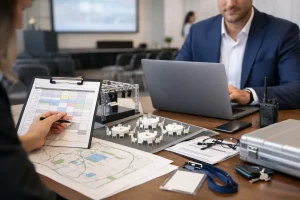
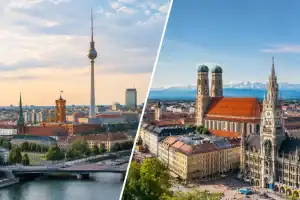
A Berlin congress, a Munich incentive, and a Frankfurt customer summit may all require registration, hotels, transportation, and impeccable guest care. Yet the partner best equipped to lead each project can be very different. The DMC versus PCO Germany decision is not a question of which provider is better. It is a question of ownership: who is responsible for the event’s purpose, who owns the destination experience, and where operational risk sits.
For international planners, the distinction matters early. Choosing the wrong model can create duplicated work, unclear decision paths, gaps between the congress program and on-the-ground delivery, or an event that is technically sound but fails to make guests feel genuinely welcomed. Germany rewards precise planning. Its major cities offer world-class infrastructure and extraordinary venues, but supplier coordination, local regulations, group movement, and guest expectations deserve experienced management.
What a PCO Does in Germany
A Professional Congress Organizer, or PCO, is primarily structured around the planning and delivery of congresses, conferences, conventions, and often association meetings. Its central strength is the formal event framework: scientific or educational programming, abstracts, speakers, delegates, sponsorship, exhibitions, registration, and congress finances.
A PCO is usually the natural lead when a meeting has a substantial content architecture. This may include a medical congress with abstract submissions and continuing education requirements, an association convention with elections and member governance, or an industry conference with a large trade exhibition. The PCO coordinates the processes that turn a complex agenda into a functioning congress.
In a German setting, that can mean managing delegate registration, liaising with a congress center, creating session schedules, coordinating speakers and moderators, handling exhibitor manuals, overseeing badge production, and supporting on-site congress operations. Depending on the mandate, the PCO may also manage budget reporting, sponsor packages, call-for-papers processes, and compliance requirements.
The PCO’s perspective begins with the event itself. Its primary question is often: how do we deliver a professional, structured, and commercially viable congress for organizers, delegates, speakers, and exhibitors?
What a DMC Does in Germany
A Destination Management Company, or DMC, starts from a different place: the destination and the complete guest journey within it. A DMC brings local market knowledge, supplier relationships, logistical control, and creative program design to corporate groups visiting Germany.
For a DMC, the event venue is only one part of the experience. The work extends to selecting the right hotel neighborhood, arranging executive arrivals, building transportation plans, sourcing a gala venue that will take your breath away, managing off-site dinners, designing incentive activities, and ensuring every guest movement feels considered.
This role is particularly valuable for corporate meetings, leadership retreats, incentives, product launches, customer events, and international groups with limited local knowledge. A DMC understands the practical details that can shape the entire perception of an event: travel times between the airport and hotel, the quality of service at a local restaurant, which historic venue can support the required production, and how to create a group program that feels authentically German rather than interchangeable.
A full-service German DMC may also coordinate attendee administration, hotel room blocks, venue scouting, airport welcomes, staffing, cultural excursions, team-building activities, and business travel support. Its primary question is: how do we make this group’s time in Germany efficient, distinctive, and flawlessly managed from arrival to departure?
DMC Versus PCO Germany: The Practical Difference
The clearest difference lies in the center of gravity. A PCO manages the congress machine. A DMC manages the destination experience around and beyond it.
That distinction does not mean their responsibilities never overlap. Many PCOs source hotels and venues. Many DMCs support registration and event production. The deciding factor is not a service list alone, but the depth of specialization and the scope of accountability.
Consider an international medical association bringing 2,500 delegates to Hamburg. The scientific program, abstracts, exhibition sales, sponsor deliverables, and delegate registration may require a PCO to take the lead. A DMC can then provide vital local support: negotiate and manage hotel allocations, coordinate airport services, arrange off-site dinners, deliver VIP programs, and create memorable pre- and post-congress experiences.
Now consider a U.S. company rewarding its top sales performers with a five-day program in Munich and the Bavarian Alps. There may be no abstract process, exhibition hall, or scientific program. The challenge is creating an exceptional journey, combining premium hotels, efficient transfers, local access, creative dining, and high-touch guest service. That is a DMC-led assignment.
For a corporate annual meeting with 400 guests, either model may fit. If the main complexity is agenda development, registration technology, speaker management, and a broad production schedule, a PCO may be the stronger lead. If the meeting is part of a broader German experience involving multiple hotels, activities, evening events, and group transportation, a DMC will often provide greater value.
When One Partner Is Not Enough
Large events frequently benefit from both specialists. This is not a duplication of cost when responsibilities are clear. It is a division of expertise that protects quality.
A PCO can oversee the formal congress elements while the DMC owns the local operational layer. The PCO focuses on the meeting’s intellectual, commercial, and administrative structure. The DMC protects the guest experience on the ground, from hotel arrival and transportation to hospitality desks, social events, and destination programming.
The strongest collaboration begins with a written responsibility matrix. Before contracts are signed, define who owns hotel contracting, attendee communications, registration data, transport manifests, speaker arrivals, exhibitor logistics, VIP hosting, emergency response, and final budget approval. Vague handoffs are where even well-funded events lose precision.
For example, a PCO may send a delegate arrival list to a DMC, but the DMC needs agreed data timing and a clear process for late changes before it can plan airport staffing and transportation accurately. Similarly, a DMC may secure an exceptional off-site venue, while the PCO must ensure the evening program aligns with delegate communications and the wider congress schedule. Coordination needs to be designed, not assumed.
Questions to Ask Before Selecting a Partner
Before issuing a request for proposal, clarify the event’s non-negotiables. If the event must manage complex association governance, an extensive abstract process, or a major exhibition, ask potential partners about direct PCO experience with comparable congress formats. Request examples of registration workflows, sponsor management, scientific program coordination, and on-site delegate support.
If your priority is an elevated group experience in Germany, ask DMC candidates how they build programs beyond standard sightseeing. You should expect thoughtful hotel recommendations, transparent transportation concepts, distinctive venue options, relevant cultural programming, and realistic contingency planning. Local expertise should be evident in the details, not just in a list of famous landmarks.
There are four areas where decision-makers should expect precise answers:
- Scope ownership: Which tasks are managed in-house, and which are outsourced or coordinated through third parties?
- Local operating strength: Who has direct supplier relationships and experienced on-site staff in the cities on your itinerary?
- Financial control: How are budgets, commissions, supplier payments, cancellation terms, and change orders managed?
- Crisis readiness: Who makes decisions when flights are delayed, an activity is canceled, a speaker misses a connection, or guest numbers change at short notice?
Price matters, but it should not be the first measure of value. A lower planning fee can quickly lose its appeal if local sourcing is weak, response times are slow, or the team lacks authority to solve problems on site. For premium corporate events, the cost of an avoidable service failure is often higher than the cost of proper local management.
Why Germany Requires Local Event Intelligence
Germany is not one uniform event destination. Berlin offers scale, creative energy, and international accessibility. Munich brings refined hospitality, business strength, and access to Alpine experiences. Frankfurt is efficient for global arrivals and financial-sector events. Hamburg combines maritime character with sophisticated event infrastructure. Düsseldorf, Cologne, Stuttgart, and Dresden each create different strategic and experiential possibilities.
A DMC translates these differences into an event design that suits your audience. It can advise whether a city-center hotel supports your agenda better than a resort-style property, whether a gala should be held in a historic industrial site or a contemporary museum, and whether a packed itinerary will energize guests or create unnecessary fatigue.
My German DMC applies that local intelligence with German-style precision, combining high-class services with hands-on project management for corporate groups that expect every detail to perform. The goal is not simply to show visitors Germany. It is to make every logistical and experiential choice support the purpose of the event.
Make the Decision Around Your Event’s Real Complexity
Choose a PCO when the event’s core challenge is the administration and delivery of a formal congress. Choose a DMC when the core challenge is designing and operating an exceptional destination-based program. Choose both when the event demands rigorous congress management and an elevated guest journey across Germany.
The best partner will not force your brief into a standard package. They will ask the questions that reveal where complexity truly sits, establish clean responsibilities, and build a plan that gives your team confidence long before the first guest arrives. When the destination is treated as part of the event strategy rather than a backdrop, Germany can deliver far more than a well-run meeting.