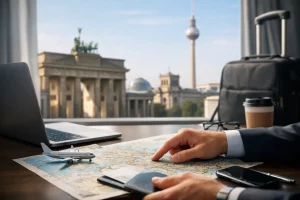
A board meeting that starts 20 minutes late because guests are split between two terminals can diminish months of preparation. Business travel is often judged by moments like this: the transfer that arrives on time, the hotel check-in that takes minutes rather than an hour, and the dinner venue that gives international guests a genuine sense of place. For corporate groups coming to Germany, those details are not incidental. They are part of the program’s commercial and reputational outcome.
Germany is an exceptionally capable destination for meetings, incentives, conventions, and executive travel. Its central European location, international air connections, respected hospitality infrastructure, and reputation for reliability make it a strong choice for organizations with high expectations. Yet the destination’s strengths only deliver value when travel planning is designed around the real purpose of the visit, not simply around flight schedules and room blocks.
Business Travel Is a Strategic Experience
Corporate travel has moved beyond the basic requirement of getting delegates from one appointment to the next. A well-designed itinerary must protect productive time, reflect the importance of the occasion, and make every guest feel considered. That means combining operational discipline with experiences that are distinctly local and appropriate for the group.
For a leadership retreat, privacy, ease of arrival, and the quality of discussion space may matter more than proximity to a major exhibition center. For a client event, a landmark venue, polished hosting, and an exceptional evening program can carry greater weight. An incentive group may require a different balance altogether: premium accommodation, a sense of discovery, and activities that reward performance without feeling forced.
The right approach depends on the objective. Treating every trip as a standard hotel-and-transfer package is one of the fastest ways to create a forgettable program. The more valuable question is: what should participants accomplish, feel, and remember when they leave Germany?
Choose the German Destination Around the Agenda
Berlin, Munich, Frankfurt, Hamburg, Cologne, and Düsseldorf each offer an impressive range of hotels, venues, and cultural possibilities. They should not, however, be selected by name recognition alone. The most suitable city is the one that supports the event’s format, guest profile, and available time.
Frankfurt is highly practical for international groups with short stays, particularly when air access and efficient connections are central to the brief. It is a compelling base for financial-sector meetings and can be paired with refined Rhine-region experiences. Munich offers a particularly strong proposition for executive gatherings, product launches, and incentive travel, with premium hospitality, Alpine access, and an assured blend of tradition and contemporary business culture.
Berlin brings scale, creative energy, and a broad venue landscape, from historic settings to modern industrial spaces. It works especially well for conferences, international teams, and programs that benefit from cultural depth. Hamburg is an elegant choice for groups seeking maritime character, excellent dining, and a more understated atmosphere. Cologne and Düsseldorf provide strong trade fair infrastructure and convenient access to the Rhine-Ruhr region.
A destination should also be tested against less glamorous but decisive factors: transfer times, traffic patterns, arrival windows, citywide events, security needs, accessibility, and the ability to hold contingency space. Local knowledge turns these variables into a workable plan before they become problems on site.
Start With the Delegate Journey
The attendee experience begins before landing. Clear pre-travel communication, accurate arrival instructions, and a visible point of contact reduce uncertainty for guests who may be traveling from multiple time zones. This is particularly relevant for senior executives, VIP clients, and first-time visitors to Germany.
Arrival management deserves detailed attention. A group arriving on the same flight has different requirements from delegates reaching the destination independently throughout the day. In the first case, coordinated airport greeting and scheduled coaches may be the most effective solution. In the second, individual transfers, monitored arrival tracking, and a hotel-based welcome team can offer greater control.
The hotel selection must serve the full rhythm of the program. A beautiful property with a long commute to the meeting venue may cost more in lost energy than it saves in room rate. Equally, a centrally located business hotel may be the right choice for a dense conference schedule but not for an incentive designed around exclusivity. Room category, executive lounge access, early check-in capacity, breakfast flow, and luggage logistics all shape the guest experience.
Build Time Into the Business Travel Program
Overloaded schedules are a common planning error. It is tempting to make every hour productive, especially when participants have traveled a long distance. In practice, back-to-back sessions, lengthy transfers, and late dinners can drain attention and reduce the impact of the agenda.
Strong programs build in transition time. Allow guests enough space to refresh after arrival, move between venues without anxiety, and have informal conversations outside the meeting room. These pauses are often where relationships strengthen and decisions take shape.
This does not mean leaving the itinerary vague. It means planning with precision. A 15-minute buffer after a keynote, a private hotel check-in area, or a coach staged before an event ends can protect the schedule while making the experience feel effortless. The best logistics are rarely noticed by guests because nothing appears to be difficult.
The Value of One Responsible Partner
Corporate planners frequently work under pressure from multiple internal stakeholders: procurement, leadership, sales teams, event agencies, and travelers themselves. Managing hotels, transport providers, venues, guides, restaurants, and production teams separately increases the risk of miscommunication.
A single local destination management partner creates a clearer chain of responsibility. The partner can align suppliers to one running order, monitor service delivery, solve changes in real time, and keep the planner informed without burdening them with every operational decision. This is not about removing the client’s control. It is about giving them confidence that the complete program is being actively managed.
For complex groups, this coordination can include venue scouting, hotel sourcing, registration support, branded welcome materials, transportation schedules, restaurant reservations, bilingual hosts, and cultural programming. Each element should be connected to the next, with contingency planning behind it.
Add Local Character Without Distracting From the Purpose
International guests should leave with more than an impression of airports, conference rooms, and hotel corridors. Germany offers extraordinary possibilities for programs that feel distinctive while remaining appropriate for a business audience.
A private museum opening in Berlin, a chef-led evening in Hamburg’s harbor district, a historic castle dinner near Munich, or a guided Rhine experience can give a corporate event lasting character. The key is relevance. A cultural activity should complement the group’s energy level, professional profile, and available time rather than compete with the core agenda.
Authenticity matters as much as spectacle. An intimate experience with a knowledgeable local host can be more memorable than a large-scale activity that feels generic. The strongest concepts connect guests to the destination through access, storytelling, food, architecture, and human encounters that would be difficult to arrange independently.
Plan for the Variables You Cannot Control
Even the most polished business travel itinerary faces changing conditions. Flight delays, rail disruptions, weather, traffic restrictions, and last-minute attendee changes are realities of group travel. Premium service is defined not by the absence of challenges, but by the quality and speed of the response.
This requires practical contingency design from the start. Alternate transfer options, flexible restaurant timing, reserve meeting space, reliable supplier communication, and an on-site decision-maker all help prevent small disruptions from becoming visible failures. For groups moving between cities, luggage handling and rail-platform support can be as important as the destination selection itself.
Budget also benefits from early clarity. A transparent proposal should identify what is included, where premium choices create greater impact, and where a more efficient alternative makes sense. Not every event requires the most expensive venue or hotel. The priority is to invest where guests will feel the difference and where operational risk is highest.
Make Germany Work Harder for Your Event
A successful program does not happen because Germany has excellent hotels and impressive venues, although it does. It happens when those assets are arranged around a disciplined, guest-centered plan. From the first airport welcome to the final farewell, every detail should support the event’s purpose and the standard your organization wants to project.
My German DMC designs and manages business travel programs with the local expertise, supplier relationships, and precise coordination required for high-stakes corporate groups. When your next meeting, incentive, or client event needs to perform at a higher level, begin with the delegate journey and choose partners who can deliver every part of it with confidence.