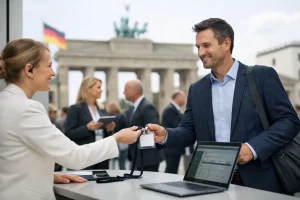
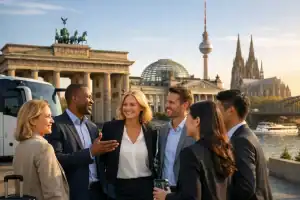
A board meeting in Munich, a product launch in Berlin, and an incentive program in the Rhine Valley can all look impressive on paper. The real test starts when flights shift, rooming lists change, VIPs add last-minute requests, and every supplier needs a clear answer now. That is where the question what does a DMC do becomes practical, not theoretical.
A DMC, or destination management company, is a local expert that plans, coordinates, and delivers programs on the ground in a specific destination. For corporate groups, that usually means much more than booking a few services. A strong DMC acts as the operational engine behind meetings, incentives, conferences, conventions, executive travel, and curated group experiences. It combines local knowledge, supplier management, logistics control, and guest-facing service into one accountable structure.
For companies entering Germany or another unfamiliar market, that role matters because complexity multiplies quickly. Language, regional supplier networks, transportation timing, venue regulations, cultural expectations, and service standards all influence the outcome. A DMC reduces that friction and turns a complicated brief into a well-run program.
What does a DMC do in practice?
In practice, a DMC designs the program, sources the right partners, negotiates services, manages budgets, and oversees execution from arrival to departure. The scope depends on the brief. Some clients need support with a gala evening and transfers. Others want full-service management across several days, multiple cities, hundreds of attendees, and a mix of business content and experiential programming.
The most valuable part of a DMC’s work is coordination. A venue may look exceptional, but it has to fit the event flow, technical needs, guest profile, access times, catering concept, branding plan, and transportation schedule. A hotel may be luxurious, but it also has to align with room block strategy, meeting space availability, executive preferences, and overall budget. A DMC sees these moving parts together rather than as isolated bookings.
That integrated view is why experienced planners often use a DMC even when they already have an internal events team or lead agency. The DMC brings local control and local accountability.
The core services a DMC typically manages
Venue sourcing is often one of the first requirements. A DMC identifies locations that fit the brief, whether that means a polished conference hotel, an industrial-style product launch space, or a historic venue that will take your breath away. More importantly, it vets those options through a practical lens. Ambience matters, but so do loading access, guest flow, acoustics, licensing, and backup plans.
Hotel sourcing is another major area. For corporate groups, room inventory, negotiated rates, cancellation terms, proximity to event spaces, and VIP handling all require careful attention. A DMC can compare options efficiently and align the lodging strategy with the broader program rather than treating accommodation as a separate purchase.
Transportation management is where many programs either feel effortless or become stressful. A DMC plans airport arrivals, executive transfers, shuttle rotations, route timing, dispatching, and contingency coverage. In destinations with traffic restrictions, trade fair congestion, or multi-point itineraries, local planning makes a measurable difference.
Attendee administration can also sit within the DMC scope. That may include registration management, rooming lists, arrival tracking, special requests, badge handling, and on-site guest communication. For larger conferences and incentive groups, this administrative layer is not glamorous, but it protects the guest experience and keeps the event team in control.
Then there is program design. This is where a DMC moves beyond logistics and adds real value to the event concept. It can shape cultural activities, dining experiences, spouse programs, team-building formats, CSR elements, entertainment, and destination-based moments that give the event its character. The best DMCs do not sell generic packages. They tailor the experience to business goals, audience expectations, and brand positioning.
Why companies hire a DMC instead of managing locally themselves
The simple answer is risk, time, and quality.
A corporate team can certainly contact hotels, venues, and transport providers directly. But direct sourcing often creates a fragmented structure with too many conversations, too little local leverage, and no single party responsible for pulling everything together. That can work for a very simple meeting. It becomes far less efficient for a multi-layered event with international guests and senior stakeholders.
A DMC shortens the planning curve because it already knows the destination. It knows which suppliers are consistently reliable, which venues photograph beautifully but underperform operationally, and which timing assumptions are unrealistic in a given city. That knowledge is difficult to replicate from a distance.
There is also a commercial advantage. A good DMC is not just a middle layer. It can protect budget through smarter sourcing, practical alternatives, and realistic planning. Sometimes the premium-looking option is not the best operational choice. Sometimes the more efficient route design saves more than an aggressive room rate ever could. Expertise shows up in decisions, not just spreadsheets.
What a DMC does before, during, and after an event
Before the event, a DMC translates the brief into an executable plan. It develops concepts, prepares proposals, sources suppliers, builds timelines, advises on destination suitability, and identifies risks early. This is the stage where precision matters most because poor assumptions made early tend to become expensive later.
During the event, the DMC becomes the control center. It coordinates arrivals, confirms suppliers, manages schedule changes, handles guest needs, and solves issues before they become visible. When execution is strong, much of this work goes unnoticed by attendees. That is exactly the point.
After the event, the DMC may handle final reconciliations, supplier follow-up, reporting, feedback review, and recommendations for future programs. Post-event work is often overlooked, but it contributes to stronger long-term planning and more efficient repeat events.
What does a DMC do that a travel agency or event agency may not?
There is overlap, but the roles are not identical.
A travel agency typically focuses on flights, ticketing, and individual travel arrangements. An event agency often focuses on creative direction, branding, content, production, and broader campaign objectives. A DMC specializes in destination-based delivery. Its strength lies in local infrastructure, supplier networks, on-the-ground logistics, and operational management within a specific market.
On some projects, all three may be involved. In those cases, the DMC is often the local execution partner that ensures the destination piece works exactly as promised. For international planners entering Germany, that local layer is especially valuable because standards are high, planning windows can be tight, and regional differences matter.
When using a DMC makes the most sense
Not every event needs a full-service DMC. A small internal meeting in a city your team knows well may be manageable in-house. But the case for a DMC becomes much stronger when the program includes multiple suppliers, VIP guests, high visibility, complex transport, premium hospitality expectations, or a destination your team does not know firsthand.
It is also the right choice when experience matters as much as logistics. Incentive travel, executive hospitality, customer events, and multi-day conferences all benefit from a partner that can shape memorable moments without losing control of operations.
Germany is a good example of this balance. It offers exceptional infrastructure, world-class venues, and strong hospitality options, but each city has its own pace, supplier landscape, and practical considerations. Berlin does not operate like Frankfurt. Munich does not feel like Hamburg. A DMC helps clients navigate those distinctions with confidence.
How to judge whether a DMC is the right partner
The first sign is how they think, not how they sell. A capable DMC will ask detailed questions about audience, objectives, timing, budget structure, executive priorities, and operational pressure points. It will not default to a standard package before understanding the brief.
The second sign is local depth. Supplier access matters, but so does honest guidance. You want a partner that can tell you when an idea is excellent, when it needs adjustment, and when a more effective alternative exists.
The third sign is execution discipline. Premium service is not only about style. It is about responsiveness, documentation, accuracy, contingency planning, and calm control under pressure. That is where experienced destination management companies distinguish themselves.
For organizations planning in Germany, working with a specialist such as My German DMC can bring that structure, local intelligence, and high-class service into one coordinated partnership.
A well-chosen DMC does not just make an event easier to manage. It gives you the confidence to plan bigger, host better, and deliver a guest experience that feels polished from the first arrival to the final departure.
nn
Looking for professional support? Explore our DMC services for corporate events and get a personalised proposal for your next event in Germany.