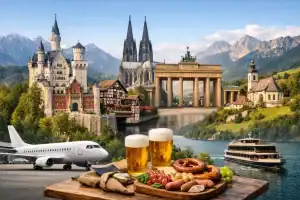
The difference between an average incentive trip and one people talk about for years usually comes down to planning discipline. If you are researching how to plan incentive travel Germany programs that feel exclusive while running on schedule, Germany is one of the strongest destinations in Europe. It offers premium hotels, efficient infrastructure, distinctive cities, and venues that can shift from formal to unforgettable within a single evening.
For corporate groups, Germany works especially well because it supports both sides of the brief. You can deliver reward, recognition, and memorable experiences without losing control of timing, service quality, or attendee management. That balance matters when your guests are senior performers, top clients, channel partners, or internal teams whose expectations are high.
How to plan incentive travel in Germany with the right brief
Strong incentive programs start before destination selection. The first question is not Berlin or Munich. It is what success should look like when the group gets home.
Some companies want pure reward and celebration. Others need a program that strengthens loyalty, introduces customers to leadership, or combines incentive moments with light business content. Germany can support all of those goals, but the shape of the itinerary changes significantly depending on the objective.
A high-performing sales team may respond best to a fast-paced city program with rooftop receptions, VIP cultural access, and a gala dinner in a venue that will take your breath away. A leadership group may need more privacy, quieter luxury, and space for relationship-building. If the trip includes international guests from different regions, accessibility and transfer simplicity become more important than novelty alone.
This is also the stage to define budget realism. Germany is not a bargain destination, and that is often a strength rather than a weakness. Clients choose it for quality, reliability, safety, and polished delivery. Still, there are trade-offs. A premium two-night program in Munich during a major trade fair can cost more than a longer stay in another German city. The brief should establish where to invest — accommodation, dining, entertainment, transportation, or exclusive venue access.
Choose the German destination that fits the audience
Germany is not one incentive destination. It is a portfolio of very different experiences.
Berlin suits companies that want energy, creativity, and variety. It is ideal for groups looking for a mix of history, contemporary culture, bold dining concepts, and event spaces with character. It works well for international audiences because it feels open, cosmopolitan, and easy to position as a high-value incentive city.
Munich brings a more classic premium profile. It is polished, well-heeled, and particularly strong for luxury hospitality, automotive themes, alpine add-ons, and elegant evening programs. If your audience expects refined service and a strong visual impression, Munich is often the right answer.
Hamburg is excellent for clients who want a sophisticated waterfront setting, modern architecture, and strong hospitality infrastructure without the intensity of Berlin. It lends itself to harbor experiences, private receptions, and incentive programs that feel elevated rather than overly formal.
The Rhine region, Frankfurt, the Black Forest, Dresden, and smaller high-class destinations can also be exceptional. The right choice depends on flight access, season, group size, and the personality of the attendees. A city that is perfect for a 40-person top achiever group may be less suitable for 250 guests with complex arrival patterns.
Build the program around experience, not just schedule
One of the most common mistakes in incentive planning is creating an itinerary that is busy but not memorable. Guests do not remember every transfer or every technical detail. They remember how the trip felt.
That means the program should have rhythm. Arrival day should be smooth and welcoming, not overloaded. The central day or evening should carry the emotional peak — perhaps a private dinner in a landmark venue, a curated cultural experience, or a team activity with real production value. The final day should close with enough energy to leave a strong last impression, without putting departures at risk.
Germany gives planners strong tools here. You can combine urban luxury with local character in a way that feels authentic rather than staged. A guided experience through Berlin can become a private evening event in an industrial-chic venue. A Munich itinerary can move from elegant hospitality to exclusive Bavarian elements without becoming predictable. The goal is not to check boxes. It is to create a sequence that feels curated for your group.
Hotels and venues set the tone early
Attendees often form their first opinion within the first hour. The hotel arrival, check-in flow, welcome hospitality, and room quality matter more than many planners would like to admit.
In Germany, the hotel market is broad, but not every five-star property is right for an incentive group. Some are stronger for executive privacy, others for large room blocks, and others for event production. Incentive travel requires more than attractive guestrooms. You need a property that can support group logistics, VIP handling, branding opportunities, and food service that meets international expectations.
The same applies to venues. The right venue is not simply impressive on paper. It must work operationally. Can coaches access it easily? Is the guest flow intuitive? How late can the event run? Are there noise restrictions, production limits, or security considerations? In Germany, many exceptional venues come with rules that need careful handling. Those details should be addressed early, not a week before arrival.
Logistics are part of the guest experience
This is where many incentive programs succeed or fail quietly. Guests may never praise a transfer plan directly, but they will notice every avoidable delay, unclear meeting point, and inconsistent communication.
Germany has a strong transport network, which is an advantage, but efficient infrastructure does not replace event logistics. Group arrivals need to be matched against airport flow, baggage timing, VIP requirements, and traffic patterns. A program spread across multiple venues may look attractive in a proposal but become tiring if every movement adds friction.
When considering how to plan incentive travel Germany itineraries, keep transitions tight and purposeful. If the group changes location, there should be a clear experiential payoff. If the hotel is outside the city center, the property should offer enough value to justify it. If you add regional excursions, departure times and travel comfort must support the premium promise of the trip.
Attendee communication also deserves more attention than it usually gets. Clear joining instructions, well-briefed hosts, visible signage, and responsive on-site coordination create confidence. For international groups, this level of control is not a luxury. It is part of risk management.
Seasonality changes the program design
Germany performs well year-round, but the experience changes sharply by season.
Spring and early summer are excellent for city incentives, outdoor receptions, lake activities, and longer evenings. Fall works well for groups that want atmosphere, strong culinary programming, and lower weather risk than winter. December can be highly attractive because of Christmas markets and festive settings, though demand is high and the best suppliers book early.
Winter can be extremely effective for the right audience, especially in southern Germany, but it requires realistic expectations around daylight, weather, and transport contingencies. Summer is appealing, yet peak dates can create pressure on hotel rates and venue availability in major cities. There is no universally best season. There is only the best season for your audience, budget, and desired style of program.
Local character should be present, but well judged
An incentive trip to Germany should feel rooted in Germany. That does not mean every program needs folk costumes, beer halls, and obvious stereotypes.
For some groups, traditional elements are exactly right when they are delivered with quality and restraint. For others, contemporary Germany is the better story — design, innovation, architecture, culinary creativity, automotive heritage, music, or modern art. The strongest programs know how to use local flavor without reducing the destination to clichés.
This is especially important for repeat travelers. Senior executives and top clients often have extensive travel experience. They respond well to access, originality, and thoughtful curation. A private format, a venue normally closed to the public, or a highly tailored evening can have more impact than a standard sightseeing inclusion.
Work with a destination partner before details become expensive
Germany rewards precise planning. It also penalizes late assumptions. Venue holds, room blocks, fair dates, licensing conditions, labor timing, and transport windows all affect the final program quality.
That is why experienced planners often involve a local destination management partner early. A strong DMC does more than source suppliers. It protects the concept from operational blind spots, advises where budget should be concentrated, and helps shape a program that is both ambitious and executable. For international buyers, that local layer is often what turns a good plan into flawless execution.
My German DMC supports clients exactly at that intersection of creativity and control — where incentive travel must impress guests while performing to a corporate standard.
If you are planning an incentive trip in Germany, the smartest starting point is not a generic package. It is a clear objective, a realistic budget, and a destination strategy built around your audience. Get those right, and Germany gives you every chance to deliver a program that feels exclusive from the first arrival to the final farewell.